We’ve all had an “I’ll just do it myself” moment. Maybe the chores just aren’t worth fighting over anymore, or a group project in school or at work would be easier if you did it on your own. But then the bigger issues come, like if you're in trouble, battling addiction, hurt, or just have too much on your plate. You keep the “I’ll do it myself” mentality, but you just end up digging yourself deeper into the problem. This is not a method I recommend, as God created us to not only rely on Him, but one another as well. Because life is hard. Absolutely no one will ever argue against that fact. But it’s a little more manageable with someone to lean on. Which is why God calls us to fellowship.
Fellowship is the act of sharing life with brothers and sisters in Christ. We live, learn, work, and grow together. But in order to join in fellowship, there is one key step that has to come first: relationship. Fellowship is a deeper connection that comes after a relationship is already there, so it is not possible to have fellowship without a relationship. First, we need a relationship with God. Having a relationship with God means believing Jesus died for our sins on the cross and accepting Him as our Lord and savior. Fellowship comes next, meaning we share our lives with God. Pray to Him, talk with Him, and do our best to follow His commands. If we have a relationship with God but continue to choose to sin without repentance, there is no fellowship. 1 John 1:5-7 says this well: “This is the message we have heard from him and declare to you: God is light; in him, there is no darkness at all. If we claim to have fellowship with him and yet walk in the darkness, we lie and do not live out the truth. But if we walk in the light, as he is in the light, we have fellowship with one another, and the blood of Jesus, his son, purifies us from all sin.”
Just like with God, we need a relationship with each other before we can build fellowship. The good news is, God helps us with this. As John says in the passage, walking with God in the light is key to fellowship with Him. The passage also says that walking in the light allows us to have fellowship with each other. This means that it doesn’t matter if we have completely different personalities and interests; we are connected through God, and that is enough. When we accept God into our lives, we are immediately adopted into His family as children of God. When we meet other believers - other children of God - the relationship is already there and established through our relationship with God, allowing us to have fellowship.
We need fellowship in order to grow in our faith. We need those around us who can call us out when we fall down - and then help us get back up. We need people with thoughts and questions that will prompt more thoughts and questions in our own minds. Hebrews 10:24-25 says, “And let us consider how we may spur one another on toward love and good deeds, not giving up meeting together, as some are in the habit of doing, but encouraging one another – and all the more as you see the Day approaching.” This is an encouragement from Paul to the church of Hebrews, and it is relevant to us as well. We still need to urge one another to love others and do good things, and there are still people who are not in the habit of meeting regularly. Paul wrote this because he knew the importance of gathering in the name of the Lord. For Jesus said in Matthew 18:20, “For where two or three gather in my name, there am I with them.”
The famous phrase “iron sharpens iron” comes from Proverbs 27:17, which, surprisingly, the world hasn’t twisted out of context into something entirely new. It means exactly what everyone says: We help each other grow. When we teach someone, we also grow, or “sharpen,” in the process. And this doesn’t only apply to pastors and elders. We are all called to disciple others, no matter age or position in the church. We all feed into each other, like a multi-tiered patio fountain, where the water runs down from one level to the next until eventually cycling back to the top.
Let’s say there’s a teenager in a church working with the Sunday school. She is teaching the children and setting a good example of how to behave in church, but she has a close friend she turns to when she has problems or questions. Then, when that friend needs help, she turns to her parents, just like her parents turn to an older couple for their own guidance. It continues, going around and around until everyone is connected.
It should be the same for the leaders of the church – which is exactly why there should be leaders, plural. Usually, there are multiple pastors and a board of elders to not only make decisions for the church, but to help each other grow and, most importantly, hold each other accountable.Everyone struggles and everyone needs guidance, even pastors and church leaders, which is exactly why we need fellowship and someone to correct us when we’re wrong and help us recover.
Another aspect of being part of a church community is having someone to lean on. Trials and difficulty are a part of life, but we’re not meant to face them alone. We are called to act like Jesus and do what we can to help those around us struggling or in need. In Mark 10 we see Jesus talking to the disciples about how the leaders of their time would hold their power over the heads of the people to make sure they listened. Then in verses 43-45 he says, “Not so with you. Instead, whoever wants to become great among you must be your servant, and whoever wants to be first must be slave of all. For even the Son of Man did not come to be served, but to serve and to give his life as a ransom for many.”
To be great in God's eyes, we are called to serve. This doesn’t mean we have to take the entirety of everyone’s burdens upon ourselves; it can be much more painless than that. Simple acts of service can make all the difference to someone who’s struggling. Bringing meals is an act always appreciated, whether someone is sick, a loved one has passed, a baby has been born, or someone is simply overwhelmed with life.
Some things are obscure and wouldn’t be someone’s immediate thought, such as mowing a grieving family’s overgrown lawn or washing dirty dishes for someone rushing out of town with a family emergency. My family and neighbors even finished building our backyard fence when we got a dog around the same time my dad had a severe back injury. Taking someone else’s burdens upon yourself doesn’t mean fixing all their problems; it is often the smaller, even unrelated, things that overwhelm us, and we are grateful to have out of the way and out of our minds. The personal acts of kindness I have seen in my own life are some of the greatest examples I have of feeling God’s support and love in times of trial.
God sees all of this. Everything we do for each other, he takes notice. And in Matthew 25:40, Jesus says, “The King will reply, ‘Truly I tell you, whatever you did for one of the least of these brothers and sisters of mine, you did for me.’” Following Jesus’s example and helping others leads to blessings all around.
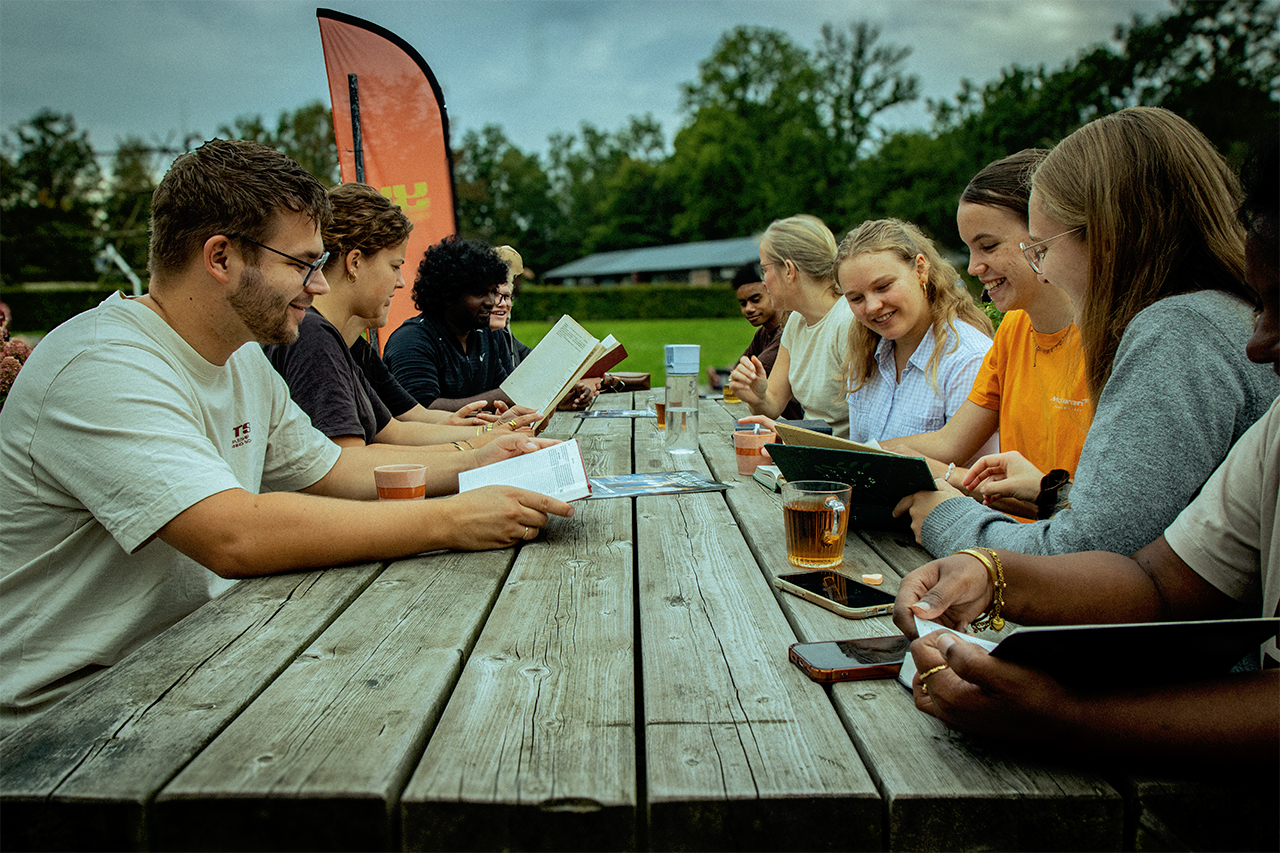
Like I said before, fellowship is sharing life with other believers. We see a great example of this in Acts 2:42-47, where it describes how the first believers shared every part of life. They learned, ate, prayed, worshipped, and took communion together, as well as providing for each other. That is more than meeting every Sunday for a church service. Attending church every Sunday is amazing, absolutely, and a useful starting point. But it is hard to really join the community with just that short weekly contact, which is why it is so important to join a Bible study, or youth group, or attend other events your church may offer. And if your church is missing these opportunities, create it yourself. Odds are, you won’t be the only one missing the connection.
1 Thessalonians 2:8 says this: “so we cared for you. Because we loved you so much, we were delighted to share with you not only the Gospel of God but our lives as well.” Fellowship and church community is a gift that God provides through our connection and relationship with Him. We just need to accept it.